Haus Der Biodiversität - Iris Scanner
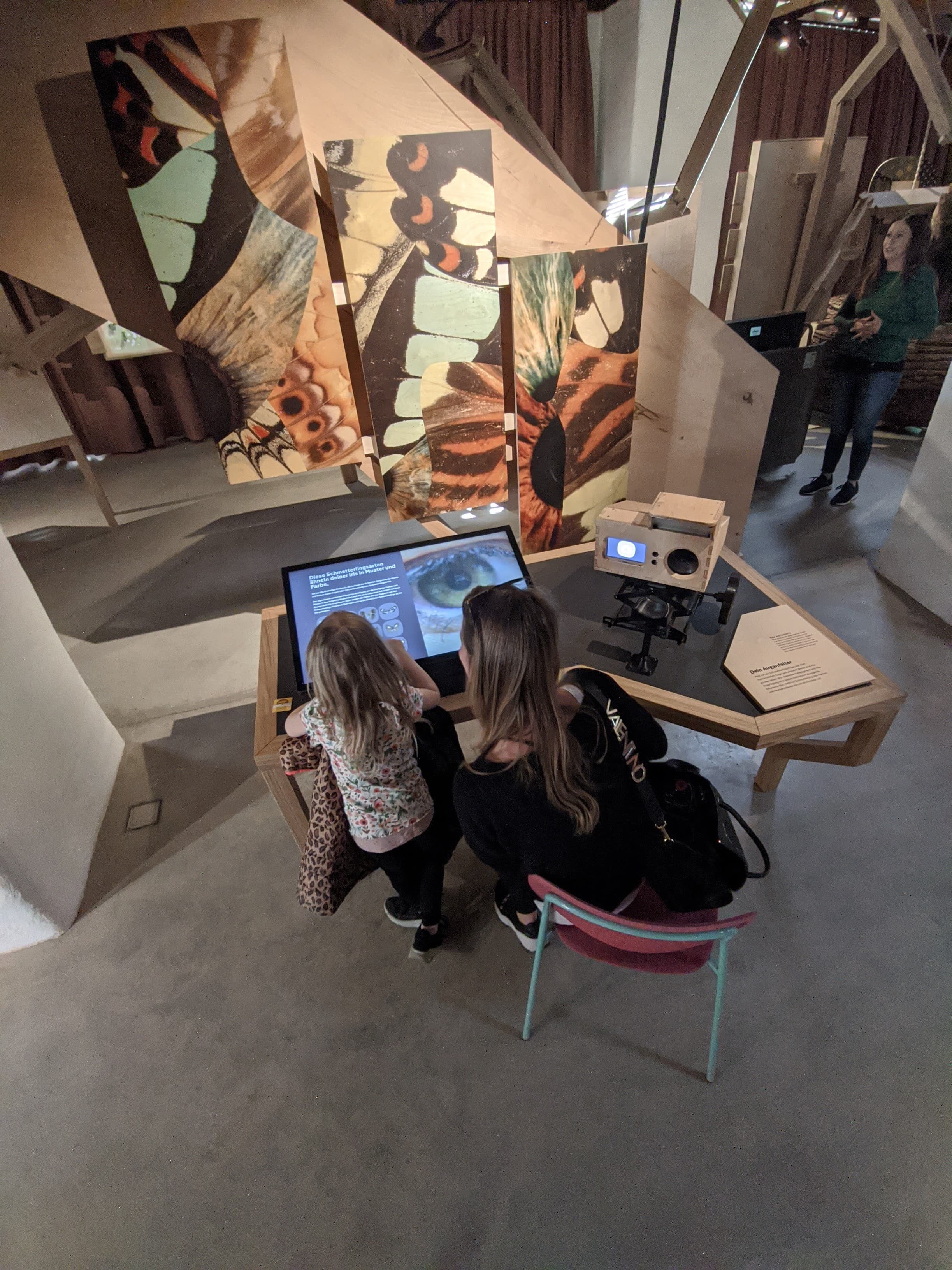
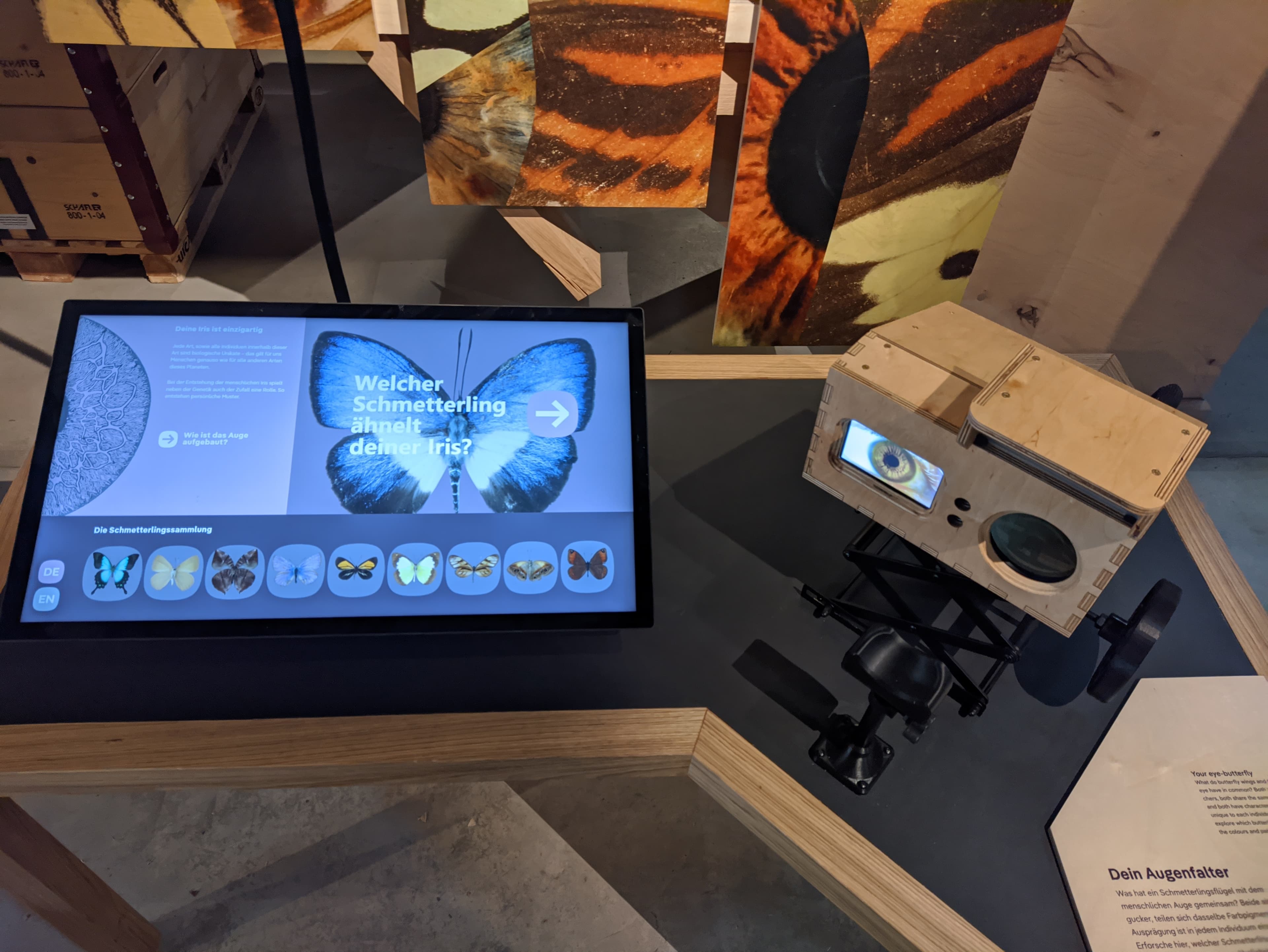
Interactive installation at HDB Herberstein, Austria. Visitors scan their iris to find their butterfly twin — the species whose eye pattern most closely matches their own, drawn from a corpus of 10,000 butterfly species reduced via t-SNE dimensionality reduction.
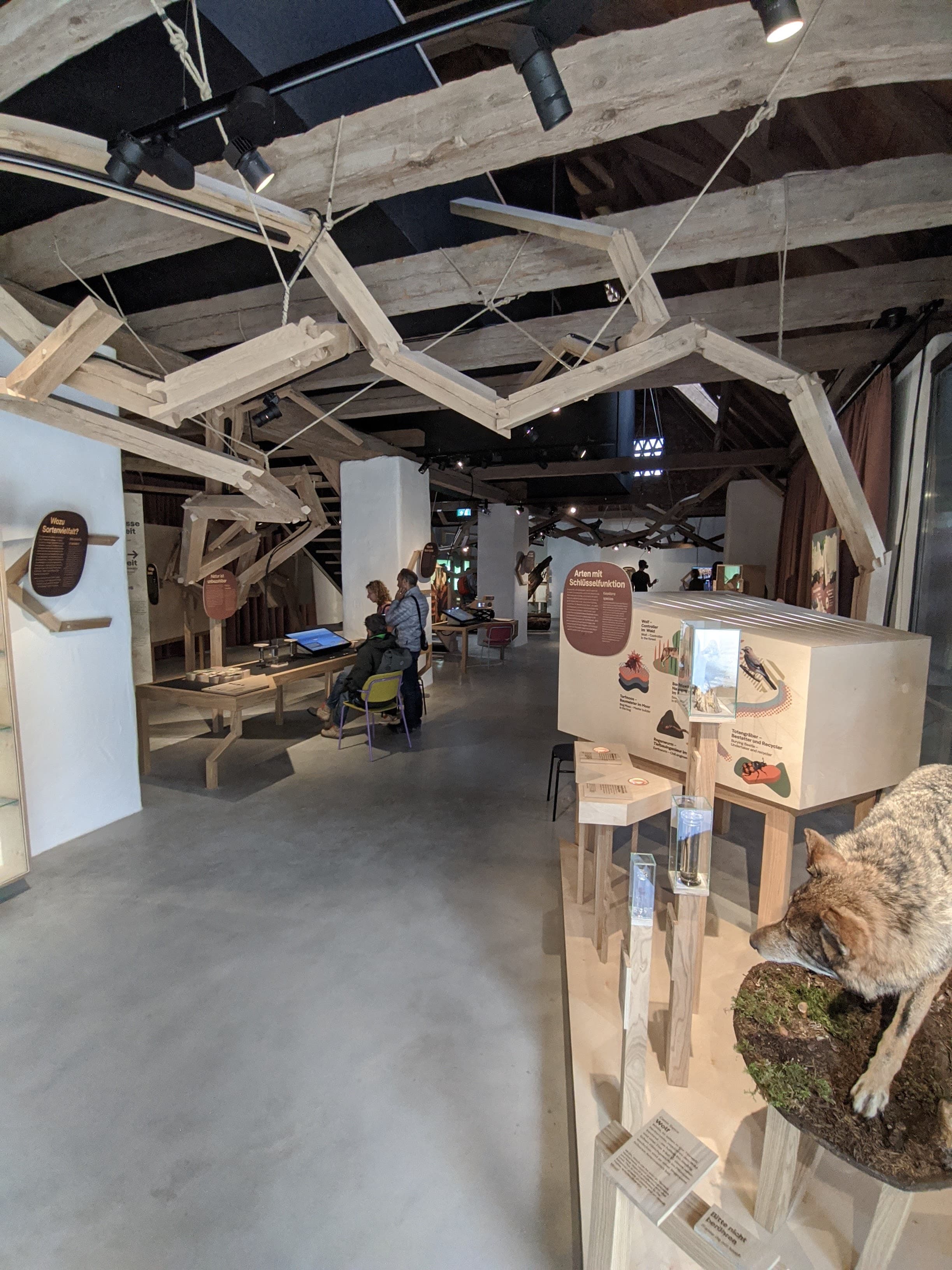
An interactive natural history installation exploring the visual correspondences between human and insect vision, commissioned for HDB Herberstein, Austria, in collaboration with Universalmuseum Joanneum.
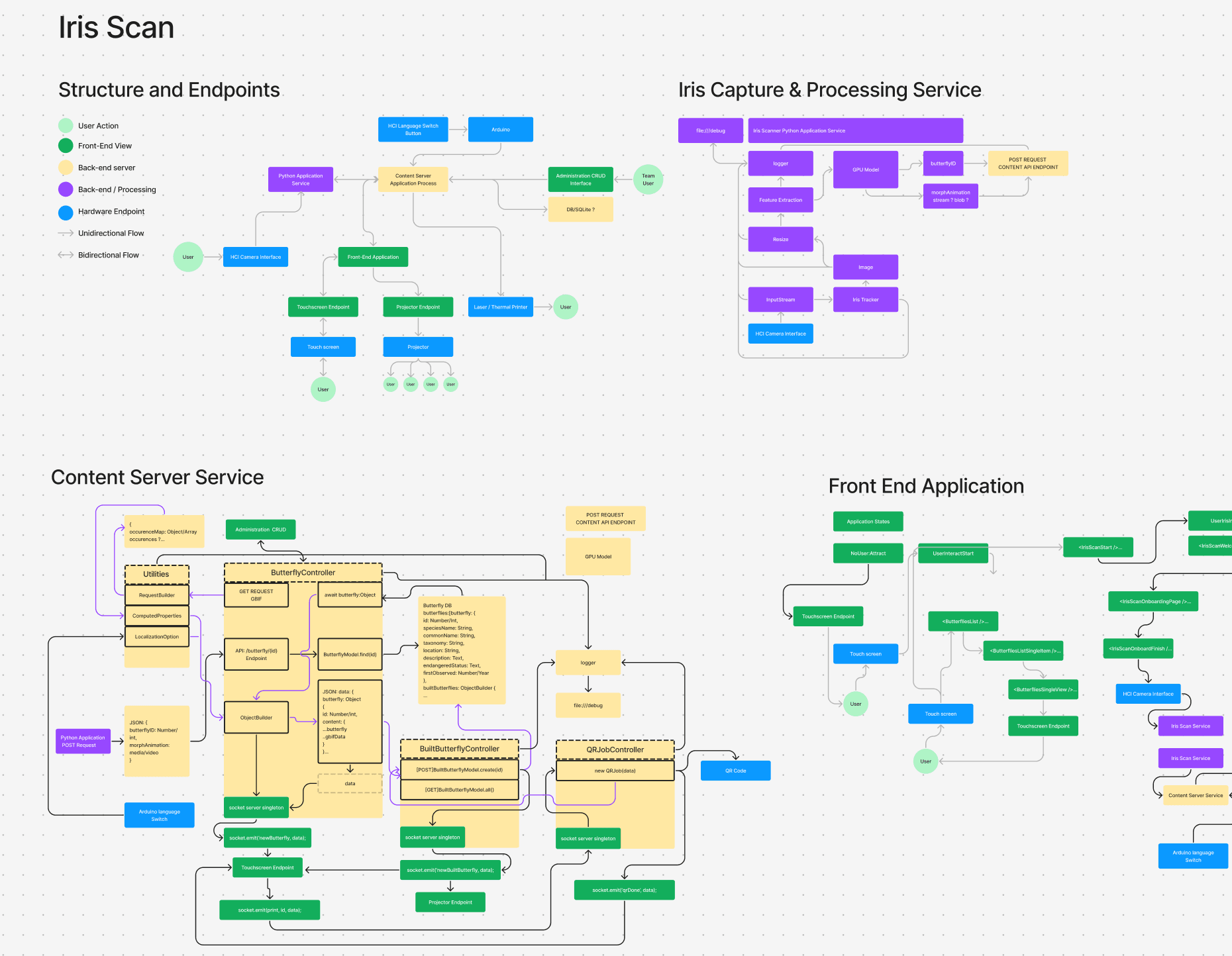
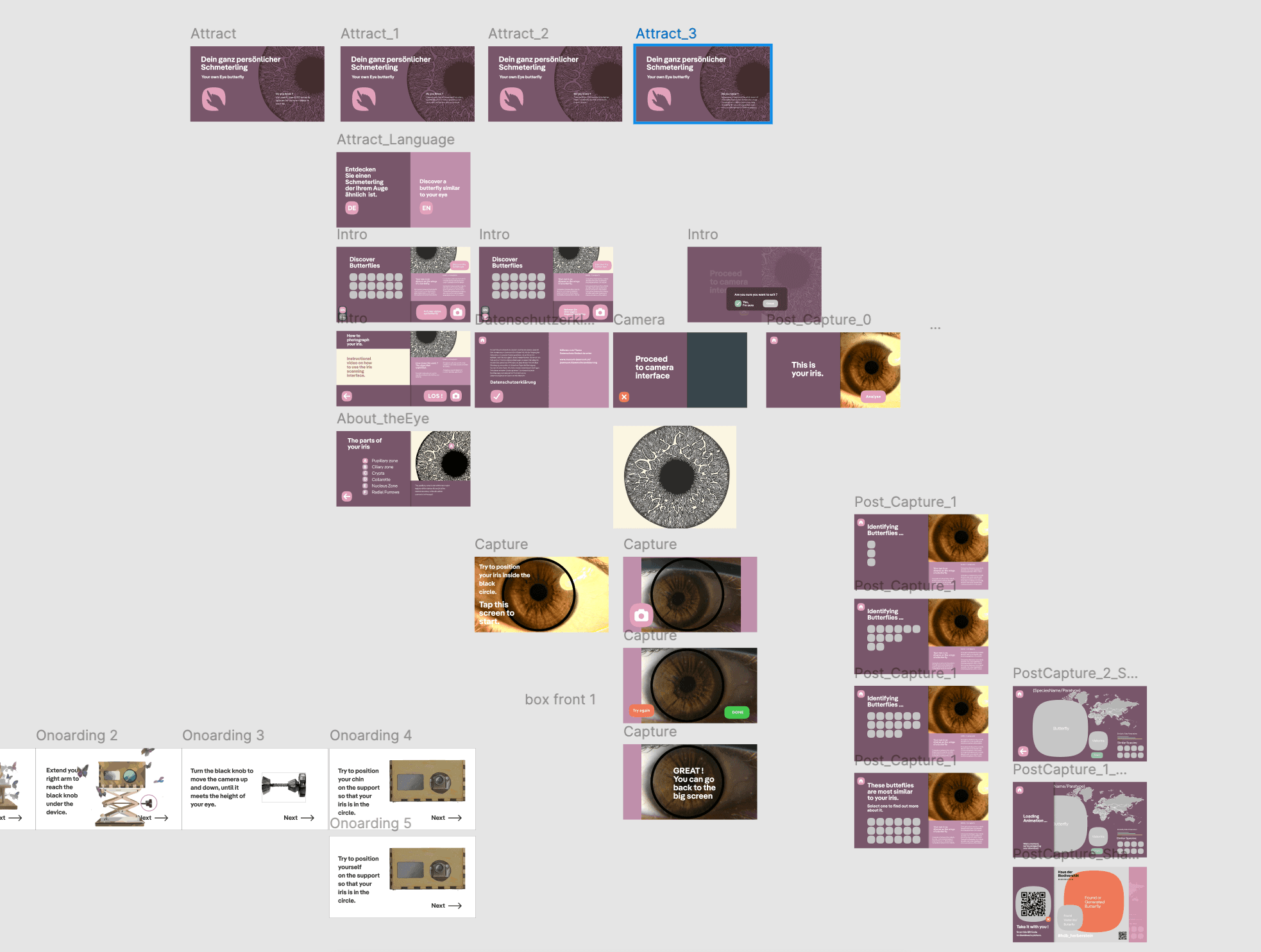
Visitors position themselves at a custom camera rig — adjustable via a physical knob to align with their eye height — and scan their iris. A Python service extracts the pattern across six anatomical iris zones and maps it against 10,000 butterfly species from the GBIF global biodiversity database using t-SNE dimensionality reduction. The system surfaces the closest species matches, which the visitor browses and selects on a touchscreen interface. A QR code delivers their personal butterfly profile to take home.
The full interaction flow — from attract mode through GDPR consent, iris positioning guidance, real-time scanning, species selection, and result delivery — was designed by Ioan Cernei and implemented across four coordinated services: Python iris processor, Node.js content server with GBIF integration, Arduino hardware controller, and a bilingual DE/EN React touchscreen interface communicating in real-time via WebSocket
Additional interaction concepts and system architecture by Ioan Cernei, implemented with a broader technical team at HDB Herberstein, Austria.
Gallery